Techniques & Services
Advanced bodywork systems for finding and fixing the root cause of pain.
Treatment Methods We Use
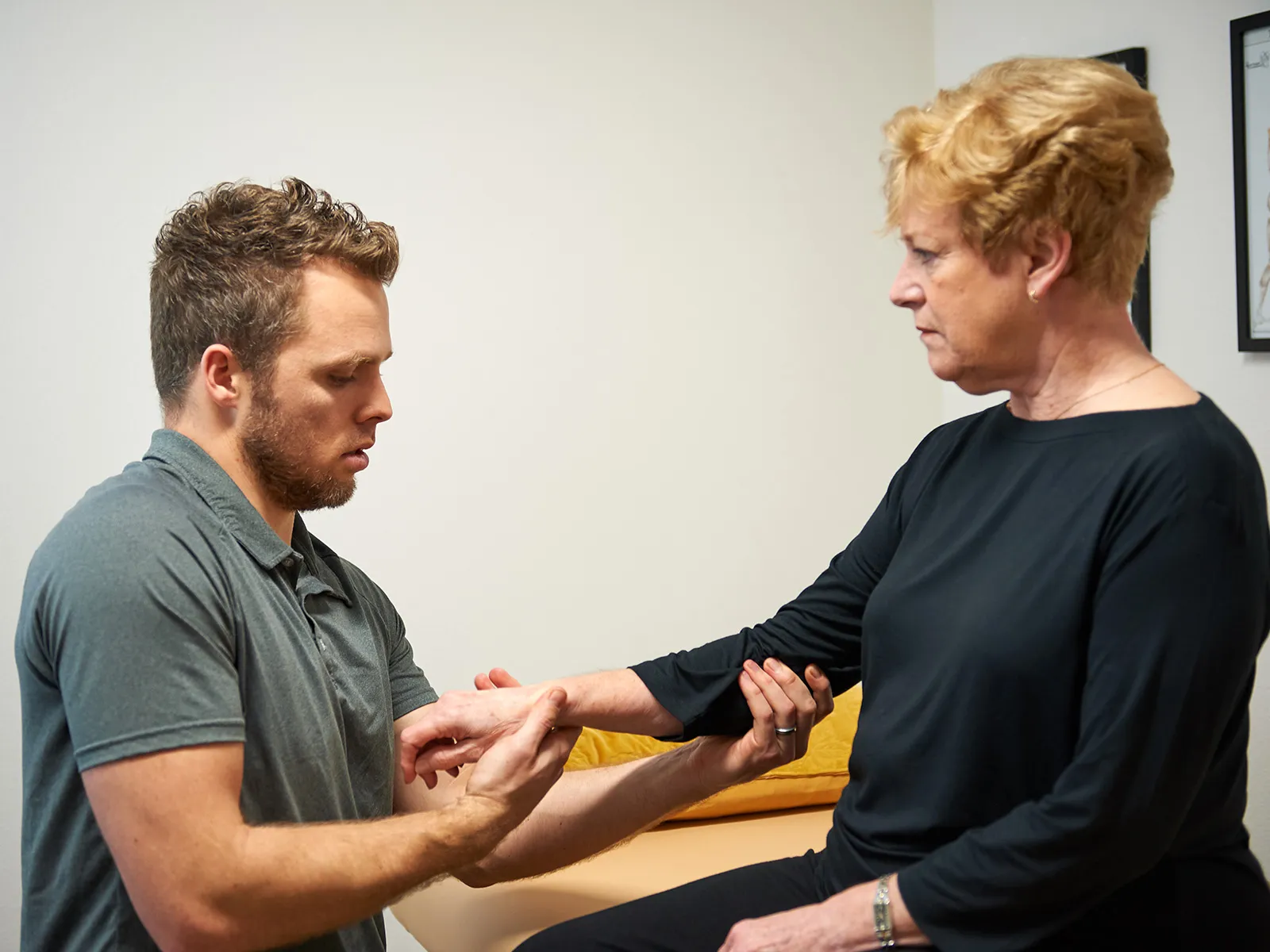
Pain and Performance Solutions uses advanced techniques in muscle therapy, movement assessment, sensory work, and nervous-system retraining to treat a variety of different muscle and joint issues.
Julian's background as an engineer created a strong foundation in root cause analysis. He uses several methodologies to address movement issues within the body, and each of these disciplines has unique elements that become especially effective when applied together rather than in isolation.
These systems of assessing and treating functional movement are also used by professionals whose careers depend on their bodies functioning at an extremely high level. The goal here is simple, bring those same tools, along with careful clinical reasoning, to people who are tired of chasing symptoms.
You can read more about each of these techniques below. A good assessment figures out which tool fits the problem instead of forcing the problem into a favorite tool.
Active Release Technique (ART)
An advanced soft tissue treatment developed by former engineer turned chiropractor Dr. P. Michael Leahy. ART is often the first thing to try when pain or discomfort appears in a muscle or joint because it directly addresses adhered, restricted, or irritated soft tissue. Julian often describes it as a medical treatment for muscle.
Learn more →
Anatomy in Motion (AiM)
A complete road map to the body through the lens of walking and gait. AiM is especially useful when foot mechanics, gait, or the way the body loads the ground are contributing to pain somewhere else. While many systems assess larger regions well, very few offer the insight into the foot that AiM provides.
Learn more →
NeuroKinetic Therapy (NKT)
A muscle-testing and motor-control system for identifying which muscles are compensating, which ones are underactive, and why a pain pattern keeps returning after local treatment. ART is powerful, but NKT gives it laser-guided precision.
Learn more →
P-DTR
A sensory and reflex-based system that recognizes how proprioception and receptor processing shape movement. When the body is receiving bad information, P-DTR helps restore a cleaner signal. It is especially useful when pain and dysfunction are being driven by bad software, not just bad hardware.
Learn more →
SFMA
A series of seven full-body movement tests that creates a diagnostic roadmap. The goal is to identify whether the problem is mobility, tissue elasticity, stability, or motor control before choosing treatment. Treat pain last, fix movement first.
Learn more →Primitive Circuit Training
A method for updating protective nervous-system responses that may be producing unnecessary pain. It is used for cases where the driver is not simple tissue damage, but an overactive protection pattern. Primitive Circuit Training grew out of years of seeing the cases that did not respond to standard manual therapy alone.
Learn more →Active Release Technique®
Active Release Technique® is an advanced soft tissue treatment developed by former engineer turned chiropractor Dr. P. Michael Leahy. After chiropractic college, Leahy studied patient movement and realized that by combining engineering principles with biomechanics he was building a new strategy for treating muscle.
It is often the first thing to try when pain or discomfort shows up in a muscle or joint, a precise treatment meant to restore normal tissue movement.
Anatomy in Motion
Anatomy in Motion, or AiM, is a complete road map to the structure of the human body through the lens of walking and gait. Many systems do a decent job assessing larger areas like the hip, pelvis, knee, thorax, and head. Very few offer the depth of insight into the foot that AiM does.
That matters because the foot is foundational. If the foot is not loading and adapting well, the rest of the body has to improvise.
NeuroKinetic Therapy™
If ART is a bomb, NKT is the laser guidance system. ART can be incredibly effective at relieving excess tension, but if the tight muscle is only compensating for something else, the pattern often comes back.
NKT helps identify which muscles are compensating, which ones are underactive, and why the pain pattern keeps returning.
Proprioceptive Deep Tendon Reflex (P-DTR®)
P-DTR® grew out of the work of orthopedic surgeon Dr. José Palomar. It recognizes that proprioception, touch, pressure, pain, temperature, stretch, and other sensory inputs, strongly shape neuromuscular output throughout the body.
In plain English, a lot of dysfunction is not just a hardware problem. Sometimes it is a software problem.
The Selective Functional Movement Assessment (SFMA™)
SFMA™ is a series of seven full-body movement tests. The tests are simple to perform, but they build into a more complete diagnostic roadmap that helps determine whether the limiting factor is mobility, tissue extensibility, stability, or motor control.
The principle is straightforward: treat pain last and fix movement first.
Primitive Circuit Training
After years in clinical practice, Julian developed Primitive Circuit Training for cases that do not respond to standard manual therapy alone. These are often situations where the primary driver is not tissue damage or simple biomechanical dysfunction, but an overactive protective response in the nervous system.
The method is built to update those protective responses so the body stops producing unnecessary pain and guarding.
Ready to find the cause of your pain?
Book a free phone consultation to discuss your situation and find out if we're a good fit.
Book a Phone Consultation